
"enter the industry"
4000 article(s) found

Malaysian "Jie Jie Fang White Coffee" officially enters the mainland market of China.
On March 29, 2017, Chopsticks, a catering enterprise with a 19-year history of brand operation in Xiamen, signed a regional cooperation agreement with Malaysia's famous "Street" White Coffee. Chopsticks sign a contract with Old Street Coffee. Malaysia White Coffee is famous all over the world, and Ipoh's "Street" White Coffee is a famous international coffee brand in Malaysia, which is the first country introduced by Chopsticks in 2017.

At present, the per capita annual coffee consumption in China is 5 cups-the Chinese coffee market is entering a white-hot stage.
Starbucks, which claimed to be a coffee e-commerce platform several years ago, repeatedly delayed its launch plan and finally decided to focus its online business on membership services. On December 15, 2014, to the surprise of the coffee chain, carving time (hereinafter referred to as Diaoguang), a local coffee chain that had been in operation for 17 years, had built one in just six months.
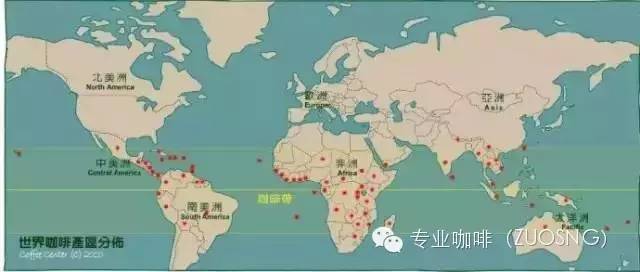
The Historical Progress of Coffee in China: how did Coffee enter China?
The history of coffee introduced into China is not long, and it was not until 1884 that coffee was first planted in Taiwan. In the mainland, the earliest coffee cultivation began in Yunnan. At the beginning of the 20th century, French missionaries brought the first batch of coffee saplings to Binchuan County, Yunnan Province, and coffee began to be grown on the mainland. In terms of natural conditions, many parts of our country, Latin America, South America, India and India

Coffee chain giant Costa accelerates market layout in Sichuan and Chongqing
Every reporter Luo Yin Chan, from PaulSmith, director of Costa Asia, one of the five largest coffee chains in Chongqing, said at the celebration ceremony of 10 stores in Sichuan and Chongqing a few days ago that Costa will continue to strengthen its investment in the Chinese market and focus on ploughing western cities such as Sichuan and Chongqing. A reporter from the Daily Business News learned that coffee chains include Starbucks, Lavazza, Pacific Coffee and so on.

The present situation of the development of coffee industry in Yunnan _ where can I sell Yunnan small coffee beans _ the output of Yunnan coffee beans
Professional coffee knowledge exchange more coffee bean information Please follow the coffee workshop (Wechat official account cafe_style) Coffee cultivation in Yunnan has a long history. In 1892, French missionary Tian Deneng came to Zhukula Village in Binchuan, Dali for missionary activities and planted the first coffee bean here. The planted coffee seed gave birth to the life of coffee for the first time in Yunnan, China.

How to choose the right brand in the raging coffee industry
And good and reliable brands also have a mature franchise system and services, which can provide the most effective and reasonable advice and support for your coffee chain stores. Caffe Pascucci Coffee has a professional design team, the most authoritative coffee training instructor, the integration of domestic and foreign top professional equipment and raw material technology, all-round brand marketing promotion, from micro promotion, video, media

Coffee Popularity: If coffee shops want to operate for a long time, they must carefully select coffee beans.
Professional barista exchanges, please pay attention to coffee workshop (Weixin Official Accounts cafe_style) Coffee is really very popular, just read the coffee books displayed in the shop to know, remember when I first came into contact with coffee, there was only one coffee primer, or a book published in the sixties of the Republic of China, and the rest can only be seen in the recipe drinks. In fact, the food related to that period

The first all-robot coffee shop in Zhejiang will be completed next year to hire Jiaxing to make "warm male Q".
It is understood that at present, China's service robots have begun to enter the market.
Why can't Chinese teahouse brands compete with coffee shops such as Starbucks?
Xiao Xia, a text editor who works for a magazine in Hangzhou, patronized Starbucks' Xihu Tiandi store again on Sunday. If the lead reporter remembers correctly, this is the third time she has visited the same Starbucks store this week. When it comes to love for Starbucks, Xiao Xia makes no secret. Starbucks' overall decoration style is petty-bourgeois and elegant. Through the big floor-to-ceiling windows, the beauty of Jinxi Lake can be seen without a glance.
Coffee industry China's coffee market is growing rapidly.
Wang Caihua, a senior research management expert in China's coffee industry, said: according to relevant industry data, the space of China's coffee market will continue to expand, and it will enter a period of rapid growth in the next 10 years. China's coffee market consumption is expected to reach 300 billion yuan by 2020. Wang Caihua believes that the expansion of the coffee market depends on the sustained development of the domestic economy and the further growth of consumer income. Near

Starbucks will train more than 3000 coffee growers in Yunnan this year
Recently, Starbucks Global President Howard Schultz (Howard Schultz) and his senior team visited Chengdu to attend a meeting of Starbucks partners and families to have face-to-face exchanges with more than 1300 Starbucks partners and their families. At the exchange meeting, Howard Schultz reiterated the importance of the Chinese market to Starbucks' future development, and announced a series of industry innovations and leaders.

December 6-December 8 Coffee Show address-December 2016 Shanghai Coffee Show
December 6-December 8 Coffee Show address-December 2016 Shanghai Coffee Fair 2016 Cafe Show will enter Shanghai, the fashion capital of China, as the third stop of the international promotion plan for Cafe Show series exhibitions. As the center of the world fashion trend, Shanghai has an unshakable position in the promotion of coffee drinks. In the past few years, the number of coffee shops in Shanghai has been urgent.

Development of Coffee Machine Market in China
At present, the Chinese coffee machine market is dominated by foreign manufacturers, and the market share is mainly concentrated in the hands of Delong and Philips. In recent years, many enterprises have entered the coffee machine industry, from 35 in 2012 to 132 in 2015, but the leading products in the coffee machine industry are still Delong and Philips, which accounted for more than 80% of the Chinese coffee machine market in 2015. Current

Shangdao Coffee encounters a pinch attack on shareholders, innovative Brands compete with each other for the Market-Shangdao Coffee enters the Brand consumption level
According to the internal staff of Shangdao Coffee, Shangdao Coffee is still managed by eight shareholders divided into eight regions. however, the branches owned by each shareholder are free to set up branches in their respective regions, and these branches are also accepted as headquarters branches, so there are 13 branches. The worker

Starbucks plans to double its difficulty: it is unclear whether consumers will buy it.
According to Starbucks' plan for the number of stores in five years' time, Starbucks will have to open at least 500 new stores each year for the next five years to meet its target. Starbucks has grown from more than 400 stores in 2011 to more than 2300 now. This ultra-rapid expansion has led to the rapid sinking of Starbucks from first-tier cities to second -, third-and fourth-tier cities. Today, Starbucks stores are doubling.

Jinuo intelligent coffee mill is popular in first-and second-tier cities in China.
More and more Chinese are beginning to sip Western drinks, and coffee is undoubtedly the first to bear the brunt. Relevant industry data show that the space of China's coffee market will continue to expand and will enter a period of rapid growth in the next 10 years. According to the London International Coffee Organization, compared with the global average growth rate of 2%, China's coffee consumption is growing at an astonishing rate of 15% a year. According to statistics, China's current

Kenya Kenya AA coffee beans Arabica boutique coffee beans
Coffee entered Kenya in the 19th century, when Ethiopian coffee drinks were imported into Kenya through southern Yemen. But it was not until the early 20th century that the bourbon was introduced by the St. Austen Mission (t.AustinMission). Kenyan coffee grows at an altitude of 1500m, 2100m above sea level, and is harvested twice a year. To ensure that only ripe berries are picked, people must be in the forest
Coffee Daily News Coffee Information
Table coffee entered the mainland in the early 1990s and first took root in the south. As a representative of business coffee, it once led a trend. However, with the development of the times, more and more European, American and Korean coffee began to enter China, especially after Starbucks entered China, which changed many people's perception of coffee and made the coffee market experience a reshuffle.

Do you really know anything about coffee from micro-batches?
A friend of mine in the coffee industry, named Alex, pays close attention to the interests of coffee people in the industry chain during the arduous process of finding beans for customers. of course, the environmental protection of coffee origin is also one of her concerns. In the past few years, we have been discussing the bean-hunting model with coffee bean quality as the core and the beneficial role of promoting micro-batch coffee of origin to promote and consolidate the development of the coffee industry.

Look at the outside world and don't just wait for one person in your coffee shop.
Communication of professional baristas Please pay attention to the coffee workshop (official Wechat account cafe_style) with bright lights and simple lines. Looking into the window, there are huge bean dryers and computer detection instruments. Were it not for the smell of coffee, it would be a science laboratory. Our meeting with Mr. Hu Yuanzheng was chosen at this Taoxuan coffee experience shop located in the Neihu Science and Technology Park.